TIME MANAGEMENT TECHNIQUES FOR GREATER PRODUCTIVITY & SUCCESS

“Don’t be fooled by the calendar. There are only as many days in the year as you make use of. One man gets only a week’s value out of a year, while another man gets a full year’s value out of a week.” – Charles Richards.
How beautifully Charles Richards has described one of the greatest truths of our lives in his quote. Our entire life runs on a track known as “time.” Each and every moment, right from when we get up in the morning until we go to sleep at night, is valuable for us. It means we need to utilize our time very diligently to be more productive and successful and maintain a proper work-life balance to reduce unwanted physical and mental stress.
Here the term “time management” comes to the forefront, as it helps us to balance our professional commitments with our personal lives to create a harmonious environment which boosts our productivity considerably and we achieve more with genuine effort.
In this article we will explore the various time management techniques and how to employ them for greater productivity and success.
WHAT IS TIME MANAGEMENT?

Time management is the procedure of meticulously dividing time between certain allocated tasks according to their importance by conscious and effective planning to achieve our goals, which boosts our productivity, efficacy and capabilities.
Time management can be done perfectly with the assistance of various techniques, skills and tools, especially when some tasks or projects or objectives come with deadlines.
Adept time management helps us to maintain harmony in our professional, social and personal life by giving us more options to balance our professional projects and tasks with personal hobbies and interests.
THE BENEFITS OF PROPER TIME MANAGEMENT

Time management holds importance in our lives since it rewards us with certain benefits:
1. Increased Productivity: When you plan and organize your tasks that matter the most, you are actually securing more time to complete your important tasks and even do extra if needed without getting exhausted. You finish the specific tasks one by one by remaining focused, tension-free and full of energy all the time. As a result, it leads to increased productivity with no compromise in quality.
Example: A content writer first does full research on the topic he is assigned to write, and then, after getting enough information, writes the topic. Thus, he never faces a blank moment while writing and delivers quality work before the deadline and at times even more in less time, with the finest quality maintained.

2. Enhanced Professional Development: Time management makes you punctual, organized, focused and confident in your work, as you are skilled to deliver your tasks on time. You even become capable of taking important decisions during emergencies and thereby your colleagues depend on you more. Thus, you are liked and preferred by your colleagues and seniors, which leads you to leadership roles and promotions.
Example: A senior project manager whose promotion was constantly getting bypassed is promoted to the position of director of the company within 6 months after he changed his work pattern in his previous project. He kept one hour in the afternoon to solve the lower-priority queries of his team and thereby got more time to create a solid SOP (Standard Operating Procedure) and a strategic roadmap. He demonstrated his ability to design scalable systems by halting the ad hoc firefighting. His team worked meticulously under his leadership to make the project a grand success that paved his way for his promotion.

3. Builds Self-Confidence: Time management develops your self-confidence, which is very essential to take any decision or to complete any kind of task, whether in personal and professional life. Without self-confidence you are just like a half-baked cake. Time management helps you to plan and organize your work and as you start delivering quality work on time, your self-confidence develops and increases day by day, making you realize that even you can finish your tasks successfully.
Example: A mid-level marketing manager is getting a lot of appreciation from her peers as she has been handling her clients with so much poise and confidence. Recently she has been giving more time to her highest-impact projects right from the morning until lunchtime and checking mail in the afternoon. So, she is no longer in a bewildered state and thus not missing her deadlines and follow-ups.

4. Better Decision Making: Incorporating time management into your daily schedule helps you to emphasize the important tasks first. With better planning, you study every situation in a composed manner and restrict yourself from rushing any conclusion. Your decisions always match with your objectives.
Example: The senior project manager got promoted to the post of Director within 6 months since he was able to take better decisions after creating a foolproof SOP and a strategic roadmap. His instant decision-making abilities during emergencies exhibited his exceptional leadership qualities.

5. Reduces Stress: Time management helps you to remain stress-free at work. Once you block time according to the importance of your tasks, there’s no missing your deadlines and you complete your tasks on time. As a result, you don’t feel stressed out and balance your tasks and other commitments calmly.
Example: As the content writer is doing full research on a certain topic beforehand, he is hardly facing writer’s block while writing and can always deliver his work before time. This reduces his unwanted stress and anxiety. Now he can sometimes deliver more tasks if he is assigned on an urgent basis, which made him reliable to his co-workers.

6. Maintains Work-Life Balance: Chalking out a proper time management system helps you to strike a proper balance between your professional and personal life, as you will be able to complete your professional commitments smoothly and manage your personal activities, like maintaining your health and hobbies, taking care of your family responsibilities and being socially active.
Example: As discussed above, this mid-level marketing manager is managing her work like a pro after dedicating more time to her highest impact projects. She is now particular about deadlines and follow-ups. This way she is avoiding working extra hours and instead goes for a walk after office hours and helps her son with his homework.

7. Heightened Proficiency and Originality: Time management heightens your proficiency and originality. Due to the completion of your tasks before the deadline, you have enough time to hone your skills and use creative ideas in your work. You also implement innovative ideas in finding solutions to any kind of issue.
Example: This content writer who submits his writings much before the deadline has adequate time to refine his skills. His research is not limited to the topics he is assigned to write but much beyond that. He reads a variety of materials, including articles, novels, short stories, and news; he also studies articles, novels, short stories, news, etc.; studies storytelling and analyses the styles of different writers. Each of his writings now serves as a testament to his proficiency and originality.

8. Accomplishment of Goals: Creating a proper time management system helps you to accomplish your important tasks on time, thus getting more time to focus on your professional and personal growth and doing personal activities after work. By organizing the unplanned time into a structured schedule, you will be able to accomplish your longstanding professional and personal goals.
Example: Due to proper time management, a freelance graphic designer started his own design studio within a couple of years by focusing more time on the delivery of the finest quality creative work. He even made great effort in client acquisition and spent not more than an hour on low-priority tasks.

Reduces Distraction: Time management teaches you to become stricter with how much time you are allocating for your important, less important and unimportant tasks. As a result, you are tied down to a routine where your mind instructs you when to do your tasks and when to scroll your social media apps, read news or chat with your co-workers or friends. So, time management reduces your distractions to a great extent.
Example: A mid-level marketing manager after chalking out her routine has given priority to her most important projects from morning until afternoon and during this time, she hardly checks emails or scrolls down her Facebook or Instagram feeds or engages in chatting. Her only focus remains on her high-impact projects. So, now she never misses her deadlines and follow-ups, which she earlier missed due to various distractions.
EFFECTIVE TIME MANAGEMENT TECHNIQUES
There are certain proven effective time management strategies that you can follow according to your preference to carefully design your schedule:

1. Pomodoro Technique: The Pomodoro Technique, an effective time management method, was invented by Francesco Cirillo in the late 1980s while studying at the university in order to complete his assignments and studies without feeling stressed. For this experiment he used a tomato-shaped kitchen timer to divide the entire work into structured blocks of 25 minutes of intense, focused work (known as ‘Pomodoro’, as named after the tomato-shaped kitchen timer), followed by 5 minutes of short breaks, and after finishing four back-to-back Pomodoro, indulging in a longer break of 15 to 30 minutes.
The Pomodoro technique has five core steps:
(i) Select a single task that you want to work on.
(ii) Set the timer in your laptop or phone for 25 minutes.
(iii) Focus only on your task without checking your emails or social apps, etc., until the timer sounds.
(iv) Take a 5-minute break.
(v) After completing four back-to-back Pomodoro, take a longer break of 15 to 30 minutes.
The Pomodoro technique helps you in enhancing your expertise in single tasking, tracking your progress and making it a habit of taking breaks between tasks to maintain your focus.
Example: You can complete a college essay writing assignment like a research paper of 1000 words by using the Pomodoro technique in 3 hours or 180 minutes.
Promodoro 1 (0:00 – 0:25): Solve the Prompt and Outline
Step: Study the prompt and try to decode it and write a one-sentence statement of your thesis. Enumerate three primary arguments of your thesis and select the supporting data for each.
Break of 5 minutes: Get up and stretch your hands and take your eyes off the screen to give them rest.
Pomodoro 2 (0:30 – 0:55): Body Paragraph 1
Step: Write body paragraph 1, which has to be very impactful. Begin with topic sentences that are clearly understandable, present your evidence or quotes, and describe how this evidence proves your thesis.
Break of 5 minutes: Walk around the room and stretch your hands and back.
Pomodoro 3 (1:00 – 1:25): Body Paragraph 2
Step: Write Body Paragraph 2 that consists of supporting points. Don’t stop and correct your grammar and typos or change the words. Just put your ideas into words without disturbing your flow.
Break of 5 minutes: Stand up and drink a few sips of water or coffee.
Pomodoro 4 (1:30 – 1:55): Body Paragraph 3
Step: Write Body Paragraph 3, where you will put your arguments that will finally develop into a logical conclusion.
Break of 5 minutes: Get up from your desk and sit in a nearby place and do some deep breathing to mentally reset yourself.
Pomodoro 5 (2:00 – 2:25): Introduction and Conclusion
Step: After writing the body, you are more aware and knowledgeable about your topic. So now write the introduction paragraph appealing enough to the readers to read your thesis. Again, write the concluding paragraph that summarizes the key points leaving a lasting impact on the reader’s mind.
Break of 5 minutes: Either walk around or do deep breathing in your last break to clear your mind for final editing.
Pomodoro 6 (2:30 – 2:55): Extensive Editing and Citation Formatting
Step: Read your entire essay thoroughly from start to end. Do the proofreading, i.e., correct the grammatical and typo errors, and eliminate the awkward phrases with better ones. Format your bibliography/reference/citation works.
2:55 – 3:00: Submit your assignment.

2. Eisenhower Matrix: The 34th President of the United States of America, Dwight D. Eisenhower, created the Eisenhower Matrix, often called the Urgent-Important Matrix. Prior to being elected president, he was a general in the US Army, the Supreme Commander of Allied Forces, and the first Supreme Commander of NATO. He frequently had to make crucial decisions during that time. He therefore made the decision to prioritize tasks based on their significance, which resulted in the creation of the renowned Eisenhower principle.
The Eisenhower Matrix is a technique for time management and decision-making that divides work into four quadrants according to two primary criteria: (i) Urgency, tasks that require immediate attention and
(ii) Importance, tasks that support your long-term objectives.
The Four Quadrants:
Quadrant 1: Act first (extremely important and urgent)
Meaning: The tasks which are to be done immediately to meet the deadlines or face consequences if not done, like emergency, crisis period, deadlines and urgent issues that require immediate attention.
Step: Do it now.
Quadrant 2: Schedule (important but not urgent)
Meaning: The tasks which do not have any immediate deadlines but conform to your long-term objectives, like personal growth, skill building, workouts, long-term planning and projects.
Step: Decide when to do the task and fix the time accordingly.
Quadrant 3: Delegate (urgent but not important)
Meaning: The tasks which are urgent but do not require your expertise, like phone calls, unimportant emails, unproductive and non-beneficial meetings and interruptions in your work.
Step: Try to pass it on to someone else if possible.
Quadrant 4: Delete/Remove
Meaning: The inferior habits and tasks or mind distractors that are complete time waste, compulsive and meaningless scrolling on your phone and doing valueless tasks.
Step: Stop doing it immediately.
Example: A cashier of a grocery store following the Eisenhower Matrix:
Quadrant 1: Act first (extremely important and urgent)
(i) Managing a long queue of waiting and restless customers.
(ii) Resolving cash differences or register errors.
Quadrant 2: Schedule (important but not urgent)
(i) Studying the new barcode technologies.
(ii) Counting the cash or arranging the cash kept in the drawer.
Quadrant 3: Delegate (urgent but not important)
(i) Checking the 25% discount on a biscuit packet following the complaint of the customer that the 25% discount tag was present below that particular brand of biscuits on the rack.
(ii) Checking the actual price of an unlabeled item.
(iii) Replacing a damaged item of a customer.
Quadrant 4: Delete/Remove
(i) Ignoring unimportant personal calls.
(ii) Avoiding chatting with colleagues during work hours.
(iii) Restricting himself from scrolling through his phone.

3. Time Blocking: Time blocking is an effective time management strategy when your entire day is classified into a certain number of dedicated calendar slots, each of which is assigned for a single specific task or a group of similar tasks. Instead of wasting your time searching in your to-do list to select what to do next after the completion of a particular task, you already create a routine where each time slot is allotted for a particular task.
The time-blocking technique makes you realize how effectively you use your entire day to finish your important tasks and how much time you are saving for your rest and self-care. It reduces your constant context switching and mental fatigue.
Example: A Content Writer Following the Time-Blocking Technique:
9:00-9:30 AM- Admin and Client Sync (Shallow work): Checks emails, replies to clients or editor Slack messages and reviews outline feedback.
9:30-11:30 AM- Intense Work- Creative Writing- Maximum Energy (Creative Focus): He disables all notifications and focuses completely on drafting a blog or copy or article.
11:30 AM-12:30 PM- Task Batching- Content Strategy and Research (Analytical Focus): He does research on upcoming topics and interview resources and materials, create a framework or outline, or perform keyword research for next writing.
12:30-01:30 PM – Lunch Break (Mental Rest): He eats lunch, listens to some good music or walks for half an hour and steps away from all kinds of work.
01:30-03:30 PM- Refining and Editing (Critical Focus): He goes through the draft written the day before, evaluates SEO optimization, formats graphics and adjusts the tone.
03:30-04:30 PM- Admin, Pitches and Communication (Shallow Work): He reminds people to send invoices, responds to emails, posts articles on content management systems and removes Slack conversations.
04:30-5:00 PM- Shutdown Process (Planning time): He closes all the writing tabs and plans the outline of the draft of the first topic so that he can begin to write immediately the next morning.

4. Eat That Frog: The Eat That Frog strategy, made famous by productivity expert Brian Tracy, is a time management and productivity technique which stresses completing the most difficult, challenging or dreadful task first right in the morning when you have the maximum energy and enthusiasm to avoid procrastination and keep your momentum high throughout the day.
Here, “frog” means the most important and vital task of the day, which a person may tend to delay or avoid overall if it is left neglected. The benefits of this technique vary from person to person based on their existing difficulties in productivity since a certain task which poses as difficult and daunting for one person can be enjoyable and easy for another person.
Main Principles of this Technique:
Identify the frog: Select a single task that has the maximum positive influence on you and the one which you have the tendency to avoid.
Do it now: Without wasting your time on unimportant tasks like checking mail, replying to phone calls, etc., do the task immediately.
Get everything ready the night before: Keep your files, tools, notes and other essential things ready so that you can start your work next morning immediately without any delay
When you have two frogs: Eat the bigger and uglier one first.
Example:
Current Situation: A software developer is supposed to prepare a ten-page, elaborate and complicated technical report which has been delayed for four days since it feels crushing.
Feeling trapped due to wrong technique: This person, from 10 A.M. until 4 P.M. has been replying to more than forty emails, responding to brief status calls, arranging folders and feeling busy throughout while feeling anxious about the report at the same time that compels him to postpone it for the next day.
Implementing the Eat That Frog Technique:
Previous Night: He shuts down all the inbox tabs and opens a blank document where he jotted down the first four sub-steps of the report.
Next Morning (10 A.M.): He directly starts writing the report continuously for 90 minutes without diverting himself into any other work, like opening emails or Slack or turning on the notifications
The Result: His report is ready by 11:30 A.M., and he feels very light, productive and easy, as the heavy burden of the complex ten-page report has been lifted off from his shoulders.

5. Time Boxing: Another important time management technique is time boxing, which helps you to assign a maximum and fixed amount of time (time box) to perform a specific task beforehand and cease doing it immediately once the time is over.
Unlike people’s traditional thinking of focusing on a particular task until it’s completed, time-boxing strictly follows the clock, or the total time allotted for the task, and prevents the task from dragging on all day.
Benefits of Time Boxing:
Prevent Procrastination: The allotted time and the ticking timer develop a competitive attitude that helps you to complete your challenging tasks much more easily. You stop procrastinating.
Limit Perfectionism: A strict time limit curbs your over-the-top perfectionism habit and prevents you from unrestricted refining.
Preserve your schedule: Time boxing lets you decide how to spend your allotted time way ahead instead of distractions or people taking command of your day.
Example: A college student dealing with his assignment
Problem: The student has been given an essay writing assignment of 1000 words. But after completing the essay, he continuously refines the style and the tone of his writing, and as a result, he neglects his upcoming exam preparations.
Solution: The student allotted a soft time box of 90 minutes for his essay outline and jotted down his ideas and information on paper as soon as possible by abandoning his habit of overthinking since he realized that he has to stick to the strict timeline.
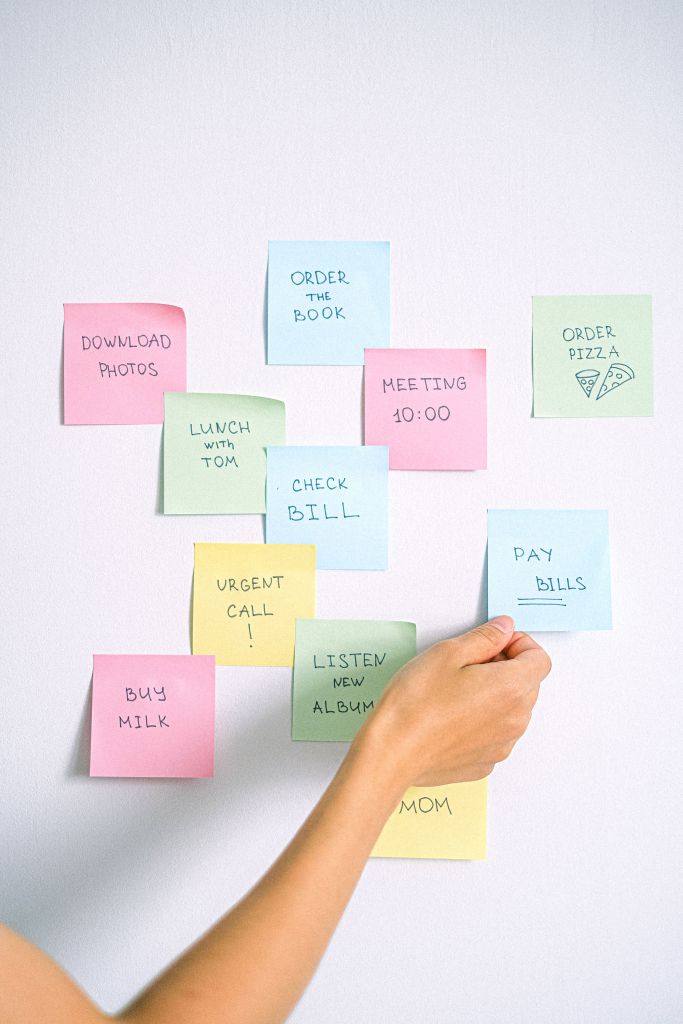
6. Getting Things Done (GTD): The Getting Things Done technique, invented by David Allen, is a personal productivity and time management technique where you transfer your tasks, ideas and commitments from your mind to a trusted external system to declutter your brain and lessen your stress level.
The Five Main Steps:
Capture: Note down your every task, to-do list, and ideas that are coming into your mind in a single mailbox (notebook, voice memo, or phone app) instead of attempting to recall them.
Clarify: Consider each item by asking, “Is it actionable?”
(i) If the answer is ‘No’, move it to the trash or file it as a reference or move it to the Someday/Maybe list.
(ii) If the answer is ‘Yes’ and it can be done under two minutes, do it now.
(iii) If the answer is ‘Yes’ and it takes more than two minutes, you defer it or delegate it. If you defer it, track it on a Next Actions list (if it is a single concrete physical action) or a Projects list (if it requires multiple steps and needs to be broken down).”
Organise: Move items to their designated lists.
(i) Move the time-specific actions to your calendar (the hard landscape)
(ii) Transfer the multi-step outcomes to your project list for weekly review.
(iii) Move the single next actions to your context lists (like @calls, @computer, and @errands).
(iv) Move the delegated tasks to your Waiting For list with a tracker date
Reflect: Clear your inbox and reassess your priorities by reviewing and updating your lists on a regular basis, including the required weekly review.
Engage: Carry out your task with confidence. Select your task dynamically based on four factors: your current context (where you are), available time, energy level and priority.
Example:
Problem: A general store owner is having mental hang-ups: he has to renew his health insurance, which will be expiring in less than a month. He needs to discuss his store’s this week’s sales target with his manager, buy vegetables and chicken from the market and repair the washing machine.
Capture: He sits down and pens down his thoughts, swirling in his mind.
(i) Renew his health insurance.
(ii) Discuss his store’s this week’s sales target with his manager
(iii) Buy vegetables and chicken from the market
(iv) Repair his washing machine
Clarify: He goes through the list one by one.
(i) He can buy vegetables and chicken on the way home for lunch break – Defer/Next Action
(ii) Discussing this week’s sales target will take approximately 110 seconds – Do it now (less than 2 minutes).
(iii) Renewing health insurance requires contacting the agent and finding the old policy papers. Since health insurance renewal involves multiple steps, it is considered a project. His next action is to search his last year’s policy number in his previous email.
(iv) Repair the washing machine – He feels it’s not worth taking so much pressure at this hour. He transfers it to Someday/Maybe.
Organize:
(i) He moves the “Buy Vegetables and Chicken” to his @errands list
(ii) He moves the “Search Email to find Policy Number” to his @computer list.
(iii) He adds “Renew Health Insurance” to the project’s list to track his objective.
(iii) He adds “Repair Washing Machine” to the Someday/Maybe list.
Reflect: Every Sunday evening or Monday morning he does a weekly review and crosses out the completed tasks, updates his project track and checks if any new task has come up.
Engage: He may quickly obtain the insurance number by looking at his @Computer list when he is sitting in his store with little energy. This way, he avoids wasting time by exploring what to do next.
HOW TO DECIDE A PERFECT TIME MANAGEMENT TECHNIQUE

The above six techniques are the primary or foundational structure of the modern productivity scenario. All other techniques are direct variants, rebrandings or a hybrids of these six primary techniques. You can select the suitable technique for yourself based on your problem:
1. Problem: Attention Drift–
You get distracted easily by social media, text messages, calls and your own thoughts whenever you sit down to do your task.
Technique: The Promodoro Technique- It reduces your mental exhaustion when you practise intensely concentrated work sprints, i.e., 25 minutes of work followed by 5 minutes of rest to build your focus and vigour.
2. Problem: False Sense of Urgency–
You were busy throughout the day, but at 6 p.m. you suddenly realized that you haven’t achieved any of your significant objectives.
Technique: The Eisenhower Matrix – It helps you get out of the confinement of ever-busy mode by segregating your high-impact objectives from your distracting deadlines.
3. Problem: Fear of Task– Being dreaded by the workload of your enormous project, you are constantly postponing it every day.
Technique: Eat That Frog- It lessens your fear and procrastination right in the morning by compelling you to complete the hardest task as the first priority, which seems your biggest obstacle.
4. Problem: Schedule Fragmentation– Meetings and notifications take up your entire day. You have no control over your calendar.
Technique: Time Blocking- It helps you regain control over your calendar by allotting specific hours for your top concerns or priorities before others can fill them.
5. Problem: Uncontrolled Project Expansion – When a lot of time is spent for perfecting the details, refining and over-editing, you fail to finish your task or project on time.
Technique: Timeboxing – Set a strict, non-negotiable timer and stop working once the alarm goes off. Thus, it checks your over-perfectionism habit.
6. Problem: Overwhelming Mental Pressure- Your brain is so overloaded that you keep forgetting to do your important tasks and this overwhelming pressure is keeping you awake.
Technique: Getting Things Done (GTD)- It fixes your anxiety, confusion and forgetful habits by decluttering your mind and moving ideas out of your brain into a trusted external tracking system.
CONCLUSION
“Time is life”, as our sole existence depends on every passing second for which we as individuals are responsible because each moment can’t be borrowed, saved or refunded. Thus, time management becomes an inevitable part of our lives. The more we understand the proper implementation of time management, the more we become productive. But it’s not possible to master the time management techniques all at once. It takes certain time to understand these techniques. With each attempt we enhance our time management abilities, which takes us to the way forward, and with every progress we multiply our productivity and become successful in achieving our goals.

